Flower Power Dishcloth: Free Beginner Crochet Pattern
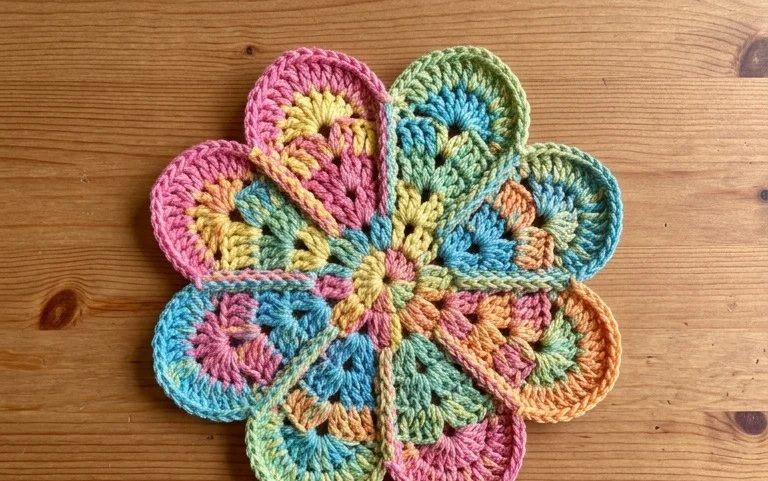
These cotton dishcloths feature a dense, petal-like texture that scrubs away stuck-on food without scratching delicate non-stick cookware. The design relies on a repetitive sequence of stitches, providing a meditative rhythm that helps beginners master tension and counting while creating something useful for the kitchen. You will find that cotton yarn holds up to high heat and frequent scrubbing better than synthetic blends, keeping your hands away from hot water as you clean. By focusing on a simple stitch repeat, you gain the confidence to finish a practical household staple while building skills that apply to larger blankets or washcloth sets in the future.
Why You’ll Love This Pattern
This beginner-friendly crochet coaster pattern uses a simple moss stitch variation that creates a dense, absorbent fabric, making it ideal for protecting your wooden tables from moisture. Because the design relies on basic chain and single crochet stitches, you can comfortably finish a set of four in a single evening. The pattern is highly efficient for using up leftover cotton yarn from larger projects, as each coaster requires only about 15 yards of yarn. Its classic square shape provides a stable base for mugs and glasses without the curling edges often seen in circular coasters.
These coasters are exactly what I needed for my coffee station. They work up quickly and the texture is perfect for catching spills. I made a set in four different colors and they look professional.
— Sarah, home crafter
Pattern Overview & Skill Level
- Skill Level: Beginner
- Approximate Time: 30 minutes per coaster
- Construction: Worked in flat rows, turning at the end of each row
- Finished Dimensions: 4 inches by 4 inches square
Materials & Supplies Needed
- Yarn: Worsted weight (#4) 100% cotton yarn, approximately 15 yards per coaster. Cotton is essential here because acrylic fibers are not absorbent.
- Hook Size: 5.0 mm (H-8) crochet hook.
- Notions: Tapestry needle for weaving in ends and scissors.
- Yarn substitutions: You may use a blend of cotton and linen, which offers excellent moisture-wicking properties. Avoid wool, as it will felt when exposed to hot mugs and water over time.
Stitch Guide & Abbreviations (US Terms)
- ch: Chain
- sc: Single crochet
- st(s): Stitch(es)
- sk: Skip
- turn: Turn your work to begin the next row
- Moss Stitch: A combination of single crochet and chain stitches, creating a woven appearance.
Step-by-Step Pattern Instructions
Main Coaster Body
Start by making a slip knot and placing it on your hook.
- Row 1: Ch 16. Sc in the 4th ch from hook. *Ch 1, sk 1 ch, sc in the next ch. Repeat from * across. Turn. (7 sc, 7 ch-1 spaces)
- Row 2: Ch 2, sc in the first ch-1 space. *Ch 1, sk the sc, sc in the next ch-1 space. Repeat from * across, finishing with a sc in the turning chain space. Turn. (7 sc, 7 ch-1 spaces)
- Rows 3-16: Repeat Row 2 until the piece measures 4 inches square.
Border and Finishing
- Edging: Ch 1, turn. Work 1 sc in each st and ch-space around the entire perimeter of the square. Work 3 sc in each corner to ensure the work lays flat.
- Closing: Join with a sl st to the first sc. Fasten off, leaving a 6-inch tail.
- Weaving: Use your tapestry needle to weave the yarn tail through the back of the stitches to secure it, then trim any excess yarn.
Care & Washing Instructions
- Machine wash your cotton coasters on a gentle cycle in cold water.
- Lay the coasters flat on a clean towel to air dry, ensuring they are squared off to maintain their shape.
- If the coasters become misshapen after washing, steam block them lightly with an iron on the low setting to reset the stitches.
Pro Tips & Common Mistakes to Avoid
Maintain consistent tension throughout the project; if your tension is too loose, the coasters will feel flimsy, while too-tight tension makes it difficult to insert the hook into the chain-1 spaces. Always place a stitch marker in the first stitch of every row to ensure you do not accidentally drop stitches at the edges, which would lead to a trapezoid shape instead of a square. To weave in your ends invisibly, run the yarn through the center of the stitches rather than across the surface, which prevents the yarn from showing on the front. If you decide to adjust the size, add or subtract stitches in multiples of two to keep the moss stitch pattern consistent, noting that a larger size will require an extra 5-8 yards of yarn per coaster.
Frequently Asked Questions
Can I use a larger hook for this pattern?
Using a larger hook will make the fabric loose and less absorbent, which is not recommended for coasters. Stick to the 5.0 mm hook or smaller to maintain a tight, functional weave.
Is this project suitable for a complete beginner?
Yes, this project is ideal for beginners because it uses only two basic stitches—chain and single crochet—in a repetitive sequence that helps build rhythm and consistency.
How do I adjust the size if I want a larger coaster?
You can increase the starting chain by any even number. Ensure your total number of stitches remains consistent in every row to keep the edges straight.
Can I sell the finished coasters?
You are welcome to sell items made from this pattern, provided you credit the designer. Always check the specific usage terms if you purchased the pattern from a private marketplace.
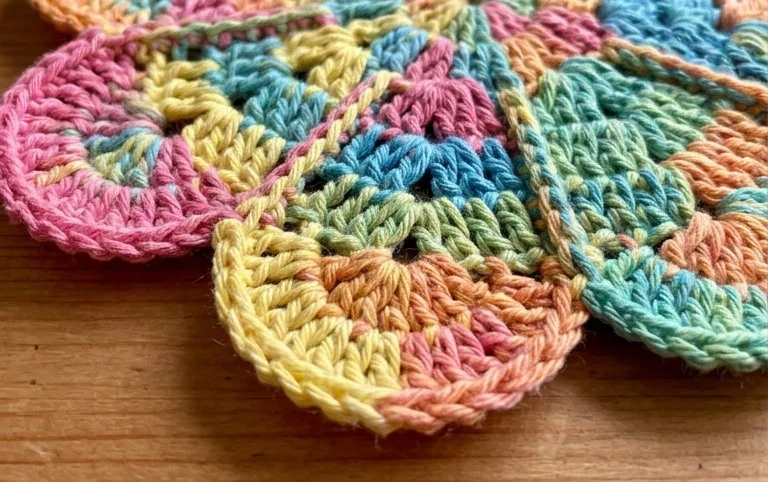
Your new handmade dishcloth brings a bright, cheerful aesthetic to your kitchen sink area while handling everyday messes with ease. Try experimenting with variegated yarn to mimic a blooming garden or work with two solid colors for a bold, graphic look that stands out. Once you finish your first piece, please tag your photos online so others can see your color choices. You can find more simple home projects and free patterns by browsing the archive links on the sidebar of this blog.